Beyond Jobs — Build Your Own Path

Entrepreneurship isn't a career choice.
It's a mindset.

You don't need a specific degree, a perfect resume, or a tech background. Entrepreneurship demands a completely different skill set — resilience, vision, and the courage to start. Here are stories, lessons, and a practical roadmap to help you begin.
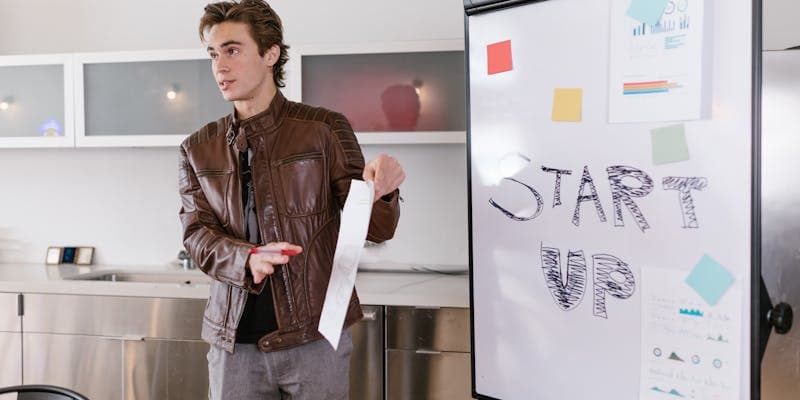
A Different Skill Set

Entrepreneurship doesn't need your college CGPA or a polished resume. It needs these skills — and none of them are taught in classrooms.

Resilience

Ability to bounce back from failures, rejections, and setbacks repeatedly

Resourcefulness

Making the most of limited resources — time, money, people

Communication

Convincing customers, investors, and employees to believe in your vision

Decision Making

Making fast decisions with incomplete information — analysis paralysis kills startups

Adaptability

Pivoting strategy when data shows your original plan isn't working

Empathy

Deeply understanding customer pain points and team dynamics

Made in India

Indian Entrepreneurs Who Rewrote the Rules

From garage startups to billion-dollar empires — these founders prove that India breeds world-class entrepreneurs.

Ritesh Agarwal

OYO Rooms

Started at 17

Dropped out of college at 17, started OYO with a single hotel in Gurgaon. Built it into the world's third-largest hotel chain by rooms. No tech degree, no MBA — just relentless hustle and a clear vision.

You don't need a degree to build a billion-dollar company. Start small, solve a real problem.

Falguni Nayar

Nykaa

Started at 49

Left a successful 20-year career in investment banking at age 49 to start Nykaa. Built India's largest beauty e-commerce platform. Became India's richest self-made woman billionaire.

It's never too late to start. Domain expertise and timing matter more than age.

Bhavish Aggarwal

Ola

Started at 25

IIT Bombay graduate who started Ola after a bad cab experience. Grew it to compete with Uber in India. Now leading Ola Electric, India's largest EV company.

Personal frustrations are often the best startup ideas. Solve your own problem first.

Vineeta Singh

SUGAR Cosmetics

Started at 27

IIM Ahmedabad graduate who turned down a Rs 1 crore job offer to build SUGAR Cosmetics. Started from her living room, now a Rs 500+ crore brand. Shark Tank India judge.

Saying no to the safe path takes courage. Build for an underserved audience.

Deepinder Goyal

Zomato

Started at 26

Started as a simple PDF menu listing for office colleagues at Bain & Company. Grew Zomato into a Rs 1 lakh crore food-tech giant. Survived multiple near-death moments.

Start with the simplest version of your idea. Perfection kills startups.

Kiran Mazumdar-Shaw

Biocon

Started at 25

Started Biocon in a garage in Bangalore with Rs 10,000 in 1978. Banks refused to lend to a woman entrepreneur. Today Biocon is a Rs 40,000+ crore biopharmaceutical giant.

Rejection is fuel. When banks say no, prove them wrong with results.

Global Icons

Global Entrepreneurs Who Changed the World

From fax machine saleswomen to rocket builders — proof that entrepreneurship has no prerequisites.

Sara Blakely

Spanx

Started at 29

Was selling fax machines door-to-door before starting Spanx with $5,000 savings. No business education, no fashion experience. Became the youngest self-made female billionaire.

You don't need industry experience. Fresh eyes see opportunities experts miss.

Jack Ma

Alibaba

Started at 35

Failed college entrance exams twice, rejected from 30 jobs including KFC. Started Alibaba from his apartment. Built it into the world's largest e-commerce platform.

Failure is just practice. Every rejection is redirection.

Richard Branson

Virgin Group

Started at 16

Dyslexic, dropped out of school at 16. Started with a student magazine, then a mail-order record business. Today Virgin Group has 400+ companies across multiple industries.

Your perceived weaknesses can become your greatest strengths.

Oprah Winfrey

OWN / Harpo Productions

Started at 32

Born into poverty, faced abuse and hardship. Started as a local news anchor, built a media empire worth $2.5 billion. Proof that your background doesn't define your future.

Your story is your superpower. Authenticity builds the strongest brands.

Elon Musk

Tesla, SpaceX, X

Started PayPal at 28

Immigrant from South Africa, slept in his office, nearly went bankrupt multiple times with both Tesla and SpaceX in 2008. Now building rockets and electric cars at scale.

Bet on yourself when nobody else will. Conviction outlasts capital.

Whitney Wolfe Herd

Bumble

Started at 25

Left Tinder after co-founding it, faced public legal battles. Built Bumble into a $8 billion dating app where women make the first move. Became youngest female CEO to take a company public.

Your setbacks can fuel your greatest comeback. Reinvent the rules.

The Startup Pathway

A practical, no-nonsense roadmap from idea to product-market fit.

1

Identify a Real Problem

Talk to 50+ potential customers. Find a pain point people will pay to solve. The best ideas come from lived experience.

2

Validate Before Building

Create a landing page, run ads, take pre-orders. Prove demand before writing a single line of code or investing money.

3

Build an MVP

Minimum Viable Product — the simplest version that solves the core problem. Ship fast, learn faster. Perfection is the enemy.

4

Find Your First 10 Customers

These are your most important customers. Serve them personally. Their feedback shapes everything that follows.

5

Iterate Based on Data

Track metrics that matter — retention, NPS, unit economics. Pivot if needed. Most successful companies pivoted at least once.

6

Build a Team

Hire for culture and hunger over credentials. A small team of A-players beats a large team of B-players every time.

7

Scale What Works

Once you have product-market fit (customers coming back and referring others), pour fuel on the fire. This is when funding makes sense.

The Do's & Don'ts

Honest, practical guidelines from founders who've been through it.

Do's

  • Start before you feel ready — the perfect moment never comes
  • Validate your idea with real customers before building anything
  • Keep your burn rate low — survive long enough to find product-market fit
  • Build a team that complements your weaknesses
  • Focus on one problem and solve it exceptionally well
  • Learn to sell — every founder is a salesperson
  • Network genuinely, not transactionally
  • Read voraciously — books, case studies, competitor analyses
  • Embrace failure as data, not defeat
  • Take care of your mental and physical health

Don'ts

  • Don't quit your job on day one — validate first, leap second
  • Don't chase funding before finding a real problem to solve
  • Don't copy someone else's business model blindly
  • Don't ignore unit economics — revenue without profit is vanity
  • Don't hire too fast — small teams move faster
  • Don't ignore customer feedback because you “know better”
  • Don't compare your chapter 1 to someone else's chapter 20
  • Don't neglect legal basics — register your company, get contracts right
  • Don't burn bridges — the startup ecosystem is small
  • Don't forget: most overnight successes took 10 years
“The biggest risk is not taking any risk. In a world that's changing really quickly, the only strategy that is guaranteed to fail is not taking risks.”

— Mark Zuckerberg